

ALITA: BATTLE ANGEL 2 (2026) Roars Back with Vengeance, Expanding the Cyberpunk Saga
After years of anticipation, speculation, and relentless fan campaigns, ALITA: BATTLE ANGEL 2 (2026) has finally arrived — and it wastes no time reigniting the high-octane, cyberpunk spectacle that first captivated audiences in 2019. The long-awaited sequel pushes its heroine beyond the scrapyards of Iron City and closer to the towering, enigmatic world of Zalem, delivering a darker, more ambitious chapter in the saga of the warrior with a human heart.
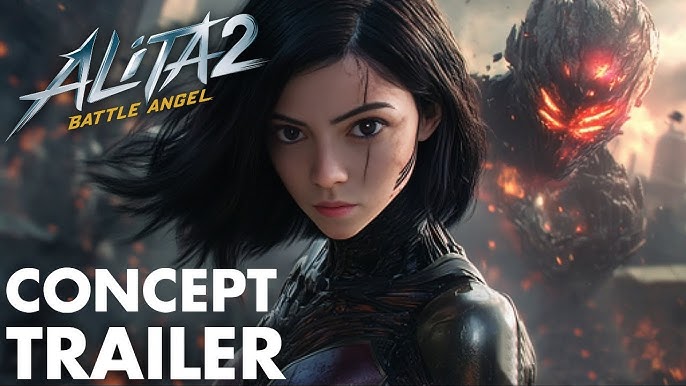
Directed once again with a blend of kinetic intensity and emotional sincerity, the sequel picks up in the aftermath of Alita’s victory in Motorball and her vow to confront Nova, the unseen puppet master whose influence looms over both Iron City and Zalem. No longer the wide-eyed cyborg discovering her identity, Alita now stands as a symbol of rebellion — a mechanical angel forged in loss, love, and war.
The film expands its world-building significantly. Zalem, once a distant dream suspended in the sky, becomes a tangible — and terrifying — reality. Its gleaming spires and sterile perfection sharply contrast with the rusted chaos of Iron City, underscoring the brutal social divide that defines this universe. As Alita ascends closer to the heart of power, she uncovers truths about her Martian warrior origins that reshape her understanding of who she is — and what she was built to destroy.

Rosa Salazar returns with a performance that once again anchors the film’s emotional core. Through groundbreaking performance-capture technology, Alita remains astonishingly expressive, her large, animated eyes reflecting a complex mix of fury, compassion, and determination. This time, however, there is a noticeable shift: the innocence that defined her in the first film is tempered by grief and resolve. She is no longer simply searching for identity — she is choosing her destiny.
The sequel leans heavily into action, delivering elaborate combat sequences that elevate the franchise’s signature “panzer kunst” fighting style. Battles are faster, more visceral, and more expansive, ranging from zero-gravity duels to brutal clashes within Zalem’s pristine corridors. Yet, amid the spectacle, the story continues to grapple with themes of humanity, class oppression, and free will — questions that resonate strongly in today’s technologically driven world.
Nova emerges from the shadows as a more fully realized antagonist, embodying cold intellectual superiority and absolute control. His ideological clash with Alita forms the backbone of the narrative: machine versus master, creation versus creator. Their conflict is not just physical but philosophical, challenging the notion of what it means to possess a soul in a body of steel.

Critics have noted that ALITA: BATTLE ANGEL 2 embraces a grander scale, sometimes at the risk of narrative density. However, many praise its willingness to deepen the mythology rather than retreat into safe repetition. The sequel dares to be bigger, heavier, and more politically charged, signaling that this is no longer merely a hero’s journey — it is the beginning of a revolution.
Visually, the film remains a triumph of digital craftsmanship. The fusion of live-action and CGI once again sets a high bar for the genre, immersing viewers in a world that feels both fantastical and disturbingly plausible. The cybernetic enhancements, neon-lit skylines, and mechanical underworld pulse with detail, reinforcing the franchise’s distinct aesthetic identity.
Ultimately, ALITA: BATTLE ANGEL 2 (2026) stands as both a continuation and an escalation. It honors the emotional foundation of the original while daring to chart a more dangerous path forward. Whether it marks the midpoint of a larger trilogy or the dawn of an even broader cinematic universe remains to be seen. But one thing is certain: Alita’s battle is far from over — and the sky is no longer out of reach.