
RATATOUILLE (2026)
November 3, 2025
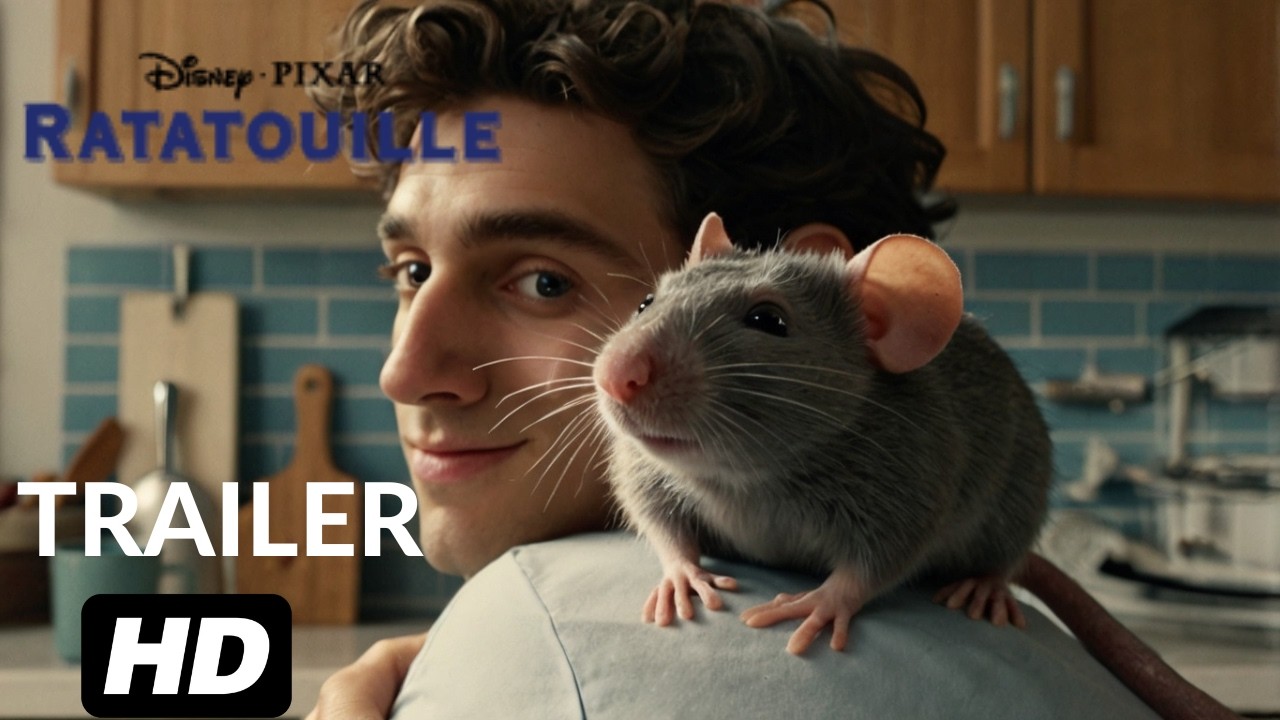
Watch movie:

*Hosted on partner site
Ratatouille (2026) – A Feast for the Heart and Soul
In the heart of Paris, where dreams simmer and ambition burns, a rat once taught the world how to cook.
Now, in Ratatouille (2026), that lesson returns — richer, deeper, and more human than ever before.
This is not merely a remake; it’s a celebration of passion, creativity, and the courage to defy the impossible.
A Taste Reimagined
Two decades after Pixar’s 2007 classic charmed audiences with its heartwarming message — “Anyone can cook” — Disney and Pixar join forces again to reimagine the tale for a new generation.
Directed by Brad Bird, the original creator, and produced by Pete Docter, Ratatouille (2026) blends photorealistic CGI with live-action filmmaking in a way that blurs the line between fantasy and reality. The cobblestone streets of Paris glisten under the rain; the kitchens gleam with heat and life; and at the center of it all is Remy — the rat with the soul of a chef.
This time, Remy is brought to life through groundbreaking hybrid animation technology, combining motion-capture and live-set integration. His fur ripples in candlelight, his eyes shine with emotion — a creation that feels alive, breathing, and heartbreakingly expressive.
The Story – A Familiar Flavor with a New Recipe
The story remains belovedly familiar, but it’s seasoned with new flavors.
Remy, voiced once again by Patton Oswalt, dreams not just of cooking, but of belonging — of bridging the gap between the world of men and the world of those who live beneath their feet. His journey collides with Alfredo Linguini, now portrayed by rising star Timothée Chalamet, a shy young kitchen worker in Gusteau’s restaurant who becomes Remy’s unlikely partner.
Together, they rediscover the forgotten recipes of the late Chef Gusteau, chasing perfection through chaos, laughter, and fire.
But where the 2007 version ended with triumph, Ratatouille (2026) dives deeper into the cost of genius. Fame, competition, and the fear of being “found out” create tension in both worlds. When the truth about Remy’s secret finally explodes across Paris, the film shifts from a comedy into a heartfelt exploration of acceptance — of others, and of oneself.

Performances That Sizzle
Timothée Chalamet brings a quiet vulnerability to Linguini — a young man burdened by legacy and self-doubt. His chemistry with Oswalt’s Remy is extraordinary, full of humor and emotional truth.
Florence Pugh plays Colette Tatou, the fierce and disciplined sous-chef who embodies ambition and integrity. Pugh’s performance gives Colette new depth — a woman torn between loyalty to her craft and her fear of change.
And in a masterstroke of casting, Christoph Waltz joins the ensemble as Anton Ego, the feared food critic whose words can make or break careers. Waltz’s portrayal transforms Ego into something more than an antagonist — he becomes the conscience of the film, a man rediscovering the joy he once lost to cynicism.
A surprise cameo by Jean Dujardin as Auguste Gusteau — appearing in dreamlike sequences that guide Remy’s moral compass — adds both humor and poignancy.
A Symphony of Senses
Few films can make you smell their world. Ratatouille (2026) does.
The cinematography by Emmanuel Lubezki captures Paris as a living poem — from the golden dawn light bouncing off rooftops to the steam rising from a freshly cooked meal. Every dish is a visual masterpiece; every kitchen shot dances with rhythm and texture.
Brad Bird’s direction once again turns the art of cooking into choreography. Flames flicker, knives slice, and ingredients collide like notes in a symphony. In the background, Michael Giacchino returns with a newly orchestrated score — a sweeping blend of jazz, accordion, and orchestral warmth that carries the same emotional melody as the original but expands it with new movement, new longing, new flavor.
Themes: Art, Identity, and the Courage to Create
Where Ratatouille (2007) was a film about dreams, Ratatouille (2026) becomes a film about legacy. It asks: What happens after the dream comes true?
Remy’s struggle is no longer about proving himself to others — it’s about protecting what he’s built. The film explores the tension between art and commerce, between inspiration and imitation, and between creation and fear.
In one unforgettable scene, Remy confides to Linguini:
“Cooking isn’t about making something perfect. It’s about making something honest.”
That honesty defines the new film’s soul. It’s not nostalgia that fuels Ratatouille (2026) — it’s evolution. It’s about art surviving in a world that’s forgotten what flavor means.
The Visual and Technical Mastery
Pixar’s use of hybrid photorealism represents a revolution in animation. The textures of food are indistinguishable from reality — melting butter, seared steak, bubbling sauce. The rats’ fur, the gleam of metal, the flicker of fire — every element feels tangible, alive, and dangerously close.
The production design transforms the Gusteau kitchen into a cathedral of creation — a world of heat and light where every frame glows with painterly beauty. The camera dances like a chef’s knife, gliding through narrow alleys, pans, and plates.
This isn’t just visual spectacle. It’s culinary storytelling, every shot crafted with love and care — as if the film itself were a dish made for the audience to taste.
The Climax: The Taste of Memory
The climax pays tribute to one of cinema’s greatest scenes — Anton Ego’s first bite of ratatouille — and reimagines it for a new era.
When Ego enters the restaurant once more, he is no longer feared but curious. The moment he tastes Remy’s dish, time stops — the music fades, the colors soften, and we glimpse his childhood once again. But this time, he sees more than memory. He sees forgiveness.
Tears fall. The critic stands. And with trembling hands, he whispers:
“It’s not the rat who cooks. It’s the dream that dares to.”
It’s cinema’s rarest magic — silence born of awe.
The Message: Anyone Can Create
In a time when art often bows to algorithms, Ratatouille (2026) dares to say that creation — real, messy, human creation — still matters. The film’s message transcends food, species, and time: passion is the most human thing of all.
Remy’s legacy isn’t just culinary. It’s emotional. He reminds us that genius can come from anywhere — even the smallest soul with the biggest heart.
Final Verdict
Ratatouille (2026) is not a remake. It’s a rebirth. A return to the essence of storytelling — a film that feeds both the eyes and the heart.
It’s tender without being sentimental, funny without being cynical, and beautiful without being artificial. Every frame feels cooked with love, every note composed with feeling, every emotion earned.
It’s not just a film about cooking. It’s a film about creating — and the courage it takes to keep believing in beauty when the world grows cold.
Rating: 9.5/10
Genre: Family / Fantasy / Drama
Directed by: Brad Bird
Starring: Timothée Chalamet, Florence Pugh, Christoph Waltz, Patton Oswalt, Jean Dujardin
Produced by: Pixar Animation Studios, Walt Disney Pictures
Music by: Michael Giacchino