
THE ARMORED GIANT OF THE ICE AGE
October 22, 2025

Watch movie:

*Hosted on partner site
GLYPTODON: THE ARMORED GIANT OF THE ICE AGE 

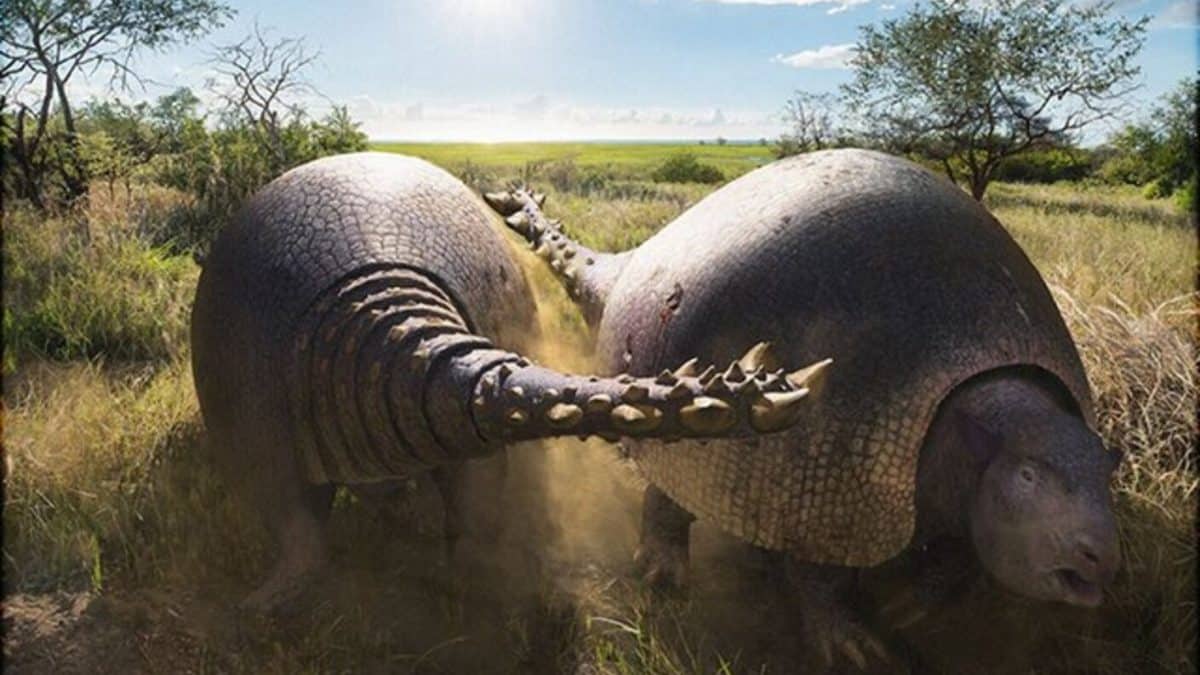
Across the windswept plains of ancient South America, during the final breath of the Pleistocene epoch some 10,000 years ago, there lumbered a creature unlike any other — the Glyptodon, a massive, armor-clad relative of today’s armadillo. This prehistoric titan, encased in a dome of interlocking bony plates called osteoderms, was nature’s masterpiece of defense — a living fortress nearly the size of a small car. Its shell, patterned like intricate mosaic stonework, shielded a creature built for endurance rather than speed, its every movement echoing the slow rhythm of a vanished age.

The Glyptodon’s might, however, was not invincible. Despite its armor and massive tail club — capable of crushing bone — it fell victim to the relentless forces of change. As Earth’s climate warmed and humans spread across the continent, the Ice Age’s frozen balance fractured. The very strength that once ensured the Glyptodon’s survival became its weakness: its heavy shell made escape impossible, and its size demanded constant grazing in a world that was rapidly transforming.

Yet, the fossilized remains of these gentle giants tell a story far deeper than extinction. They speak of adaptation and impermanence, of ecosystems that thrived in delicate harmony until time itself rewrote the rules. The Glyptodon embodies the eternal paradox of life — immense power paired with inevitable fragility.

Today, its fossils stand as solemn monuments to a forgotten wilderness, reminders of an age when armored titans roamed the earth and the boundary between survival and extinction was as thin as the ice beneath their feet. The Glyptodon endures not just in stone, but in the story it leaves behind — a testament to nature’s grand, unending experiment. 
