
THE LAST SAMURAI (2025)
November 4, 2025

Watch movie:

*Hosted on partner site
THE LAST SAMURAI (2025): HONOR IN THE SHADOW OF A DYING EMPIRE
The cherry blossoms fall like whispers of memory — soft, fleeting, and red as spilled honor. Against this haunting backdrop, The Last Samurai (2025) returns not as a mere historical retelling, but as a sweeping reimagining of destiny, loyalty, and the eternal struggle between tradition and change.
In a world balanced on the blade’s edge between the ancient and the modern, this film revisits the mythos of the samurai through a darker, more introspective lens. The story begins in 1877 — the twilight of the Meiji Restoration — as Japan rushes toward industrialization, and the once-sacred code of Bushidō begins to crumble beneath the weight of progress.
A LEGACY REBORN
At the heart of the film stands Captain Nathan Algren, once an American soldier of fortune, now a man haunted by ghosts of the battlefield. Years after the original rebellion, he lives in quiet exile, his sword long rusted, his purpose forgotten. But peace cannot last. When the shadow of rebellion rises again — this time from within the new Imperial Army — Algren is summoned back to Japan, drawn once more into the country that both destroyed and redeemed him.
Here he meets Hana Katsumoto, the daughter of the legendary samurai Katsumoto — the warrior he once called friend and foe. Hana carries her father’s spirit: fierce, graceful, and torn between the memory of the old ways and the necessity of the new. Together, Algren and Hana navigate a land split in two — one half bound to honor, the other to ambition.
The film’s emotional center lies in their bond — a connection born not of romance, but of shared grief and mutual understanding. They are soldiers of memory, guardians of fading values, standing in a world that has forgotten how to bow before beauty and sacrifice.
A CINEMATIC ODYSSEY
Visually, The Last Samurai (2025) is nothing short of breathtaking. Director Kenji Watanabe crafts each frame as a painting: mist curling around snow-dusted temples, steel glinting beneath the moon, firelight reflected in tear-filled eyes. The use of natural light evokes the quiet beauty of Kurosawa, while the scale of battle sequences rivals the grandeur of Ridley Scott.
The choreography of combat is poetry in motion — a dance of death, executed with reverence. Each swing of the katana is an act of devotion; every duel becomes a question of soul. Yet amid the chaos of war, silence reigns supreme — the silence before a charge, the silence of the fallen, the silence that follows the end of an era.
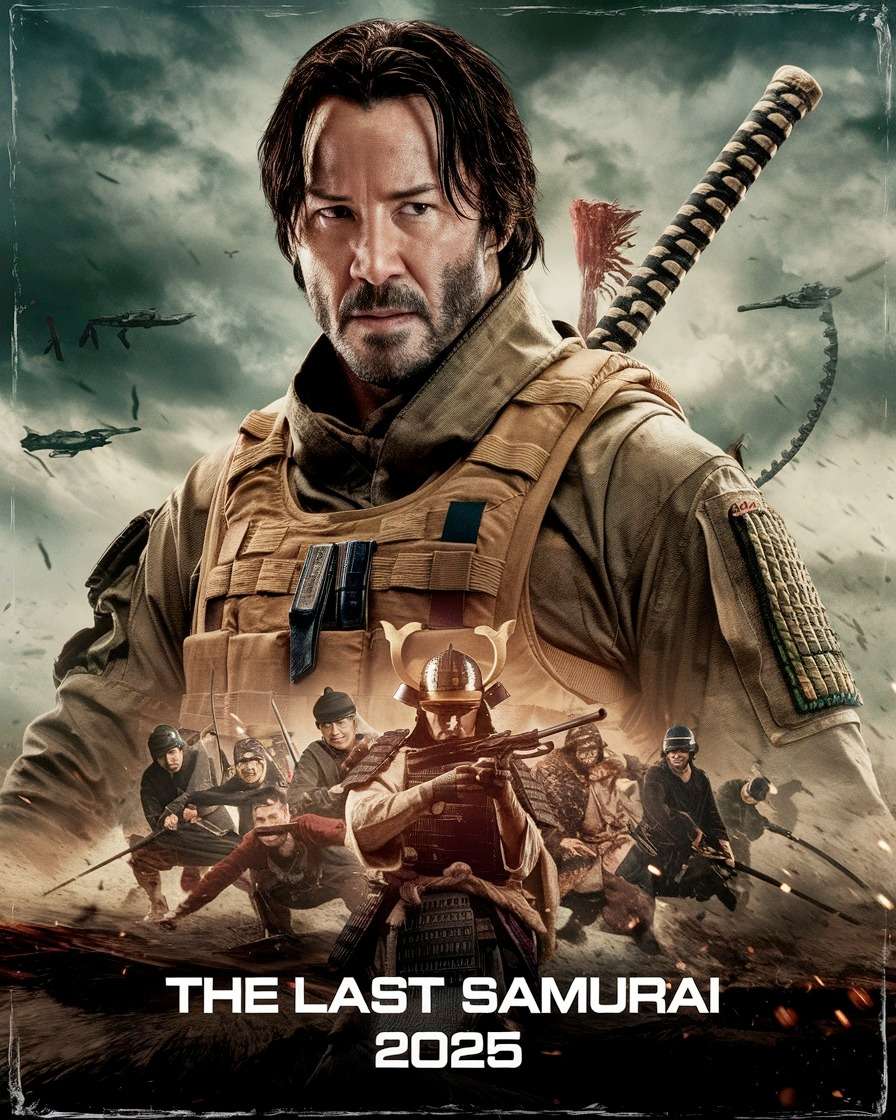
THE THEMES OF IMPERMANENCE AND REDEMPTION
What makes The Last Samurai (2025) transcendent is not the spectacle, but its philosophy. Beneath the armor and the blood lies a meditation on impermanence — mono no aware, the awareness of beauty in transience. The film mourns what is lost while celebrating what endures: courage, compassion, the human heart’s refusal to surrender its dignity.
Algren’s journey mirrors that of Japan itself — a nation searching for its soul amid the machinery of modernity. His return is not for glory, but for meaning. Through him, the film asks: Can honor survive in a world without tradition? Can a warrior find peace when the war never ends within?
THE PERFORMANCES THAT DEFINE A GENERATION
Tom Cruise returns in a performance more restrained and profound than ever before — older, quieter, his eyes heavy with regret yet burning with resolve. Newcomer Rina Sawayama, as Hana Katsumoto, commands the screen with elegance and ferocity, embodying the bridge between the old and the new. Supporting performances by Hiroyuki Sanada and Ken Watanabe (in symbolic cameos) lend the film a sense of continuity and reverence.
THE CLASH OF ERAS
The climactic battle — the Siege of Fuji Valley — is a sequence that fuses heart and history. As thunder rolls and banners burn, Algren and Hana lead a final stand against tyranny, not to preserve the past, but to prove that honor still breathes. The camera glides across the field like a spirit, capturing both chaos and grace — cherry blossoms and cannon fire sharing the same wind.
When dawn comes, the wall between yesterday and tomorrow crumbles. The empire rises, but something sacred remains — a whisper, a promise, a memory.
THE LEGACY OF A WARRIOR’S SOUL
In its final act, The Last Samurai (2025) is not about war, but peace — not about death, but the meaning of life. It closes on a single image: Hana standing before her father’s shrine, placing her sword upon the altar, whispering, “May those who come after us remember not what we fought against, but what we fought for.”
The music swells — a fusion of taiko drums and a sorrowful cello — and the screen fades to white.
The legend ends not with a roar, but a breath.
And in that breath, the spirit of the samurai lives on.