
THE WOMAN KING (2025)
November 4, 2025

Watch movie:

*Hosted on partner site
THE WOMAN KING (2025): THE RISE OF A LEGEND
In the heart of Africa’s golden dawn, where the earth remembers the footsteps of warriors and the wind still whispers their names, The Woman King roars onto the screen — not as a film, but as a revolution. Directed by Gina Prince-Bythewood and led by the incomparable Viola Davis, this epic is a blazing symphony of courage, sacrifice, and unbreakable sisterhood.
Set in the 1820s within the Kingdom of Dahomey, The Woman King tells the story of the Agojie — an all-female regiment of warriors sworn to defend their land against invaders, slavery, and betrayal. At the center stands General Nanisca, portrayed by Viola Davis with volcanic power and aching humanity. She trains a new generation of women — among them, the defiant Nawi — to face a world built to erase them. But these women do not yield. They rise, blade in hand, bound by duty and fire.
Every frame of the film breathes with purpose. From the crimson hues of battlefields to the haunting silence of moonlit rituals, the cinematography turns Africa into both a battleground and a cathedral. The clashing of spears becomes music, the chants of warriors become prayer. It is a story where pain and pride walk side by side — where victory is measured not only by survival, but by the courage to stand unbroken.
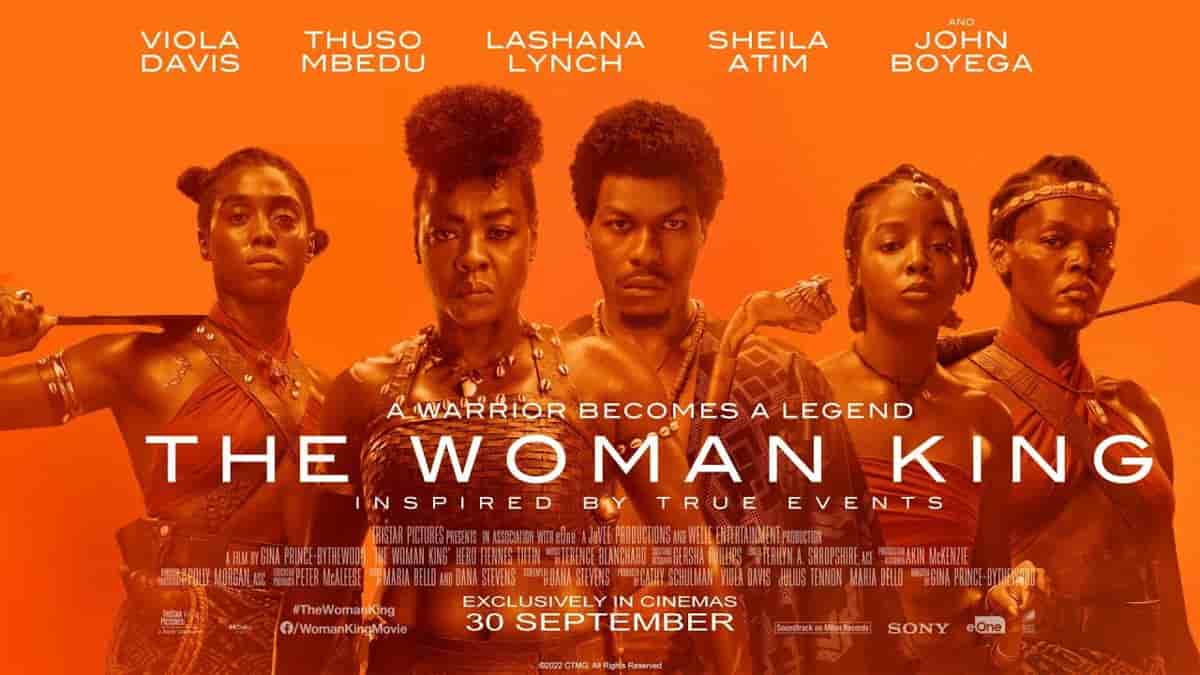
Viola Davis delivers one of the most commanding performances of her career — her Nanisca is not merely a general, but a symbol of defiance. Beneath her armor lies the weight of history, the scars of her people, and the secret wounds of her own past. Thuso Mbedu, as Nawi, embodies the fire of youth, her spirit unyielding, her heart both weapon and weakness. Together, they craft a bond that transcends time — a reflection of every woman who ever fought to be heard.
Yet The Woman King is not content to simply entertain. It demands that the audience confront history itself — the pain, the complexity, the contradictions. It dares to question power and the price of freedom. The film does not shy away from moral conflict; instead, it embraces it, showing that true strength lies not in perfection, but in the ability to face one’s own darkness.
The battle sequences are breathtaking — choreographed with the precision of dance, charged with emotion and raw physicality. The sound of steel against steel reverberates like thunder, echoing the heartbeat of a people refusing to be forgotten. But amidst the chaos of war, the film finds tenderness: moments of laughter, of sisterhood, of quiet resilience that bloom like flowers in the ashes.
What makes The Woman King unforgettable is its soul. It is a film about power reclaimed — about rewriting the narrative of who gets to be hero, leader, and legend. It celebrates the strength of Black women not as myth, but as truth. It honors the generations who stood tall in silence so that their daughters could speak in thunder.
By its final moments, as the drums rise and the women of Dahomey march toward destiny, the audience is left breathless — not only by the spectacle, but by the spirit. The Woman King is not just history retold; it is history reborn. It stands as both tribute and triumph, a cinematic monument to those who dared to fight when the world told them to kneel.